How do socioeconomic factors amongst Portuguese students contribute to their past and present academic performance?
2
To what extent does a student’s social lifestyle influence their academic performance?
Introduction
Education is universally recognized as a catalyst that can break intergenerational cycles of poverty and promote social equity. A substantial body of evidence has demonstrated how higher academic test scores relate to increased early career earnings (e.g., Chetty et al., 2011; Currie & Thomas, 2001) Despite this, a student’s academic success is shaped by a multitude of factors. Endogenous factors, such as a student’s inborn academic propensity and motivation, are just one piece of the puzzle. Larger exogenous variables, such as a student’s family background, environment and lifestyle, and time spent studying, play a significant role in shaping educational outcomes.
This project examines the extent to which student effort, family background, and lifestyle choices correlate with academic performance. Specifically analyzed were whether students who put in more effort—measured through attendance and study time—achieve higher grades, and how socioeconomic and lifestyle factors like parental occupation and social habits influence performance.
Education, then, beyond all other divides of human origin, is a great equalizer of conditions of men—the balance wheel of the social machinery.
— Horace Mann
Literature Review
Our literature review consisted of articles and books surrounding the factors regarding educational outcomes, specifically with how socioeconomic factors and social emotional learning affect academic performance. One study focused on how structural inequalities in education creates barriers for marginalized students, based on data regarding student mobility (how often a student moves or changes schools), financial hardship, institutional biases, and the long term effects this creates for students (Harrison, 2021). The effect of students’ socioeconomic status is seen in their attendance patterns, with several studies demonstrating how lower-income students tend to have higher absences in school (Sosu, 2021; Park, 2012). A separate study also reveals that mandatory attendance does not affect grade outcomes, suggesting the motivation of students to attend class is likely what contributes higher to their academic success, in addition to having full access to the material presented in class (Rendleman, 2017).
A study compared how students perform academically in rural versus urban areas, finding that students in rural areas perform better than in urban areas. Urban areas hold more opportunities for extracurricular and social activities, resulting in students spending less time at home with their families (Weir, 2015). Another study found students in both highly urban and highly rural areas tend to perform worse than those in moderately populated regions (Borland & Howsen, 1999). Across the board, spending time with family is an important part of children’s development and contributes to their academic success (Hornby, 2011).
The literature demonstrates how socioeconomic factors contribute to lower student attendance from barriers to education and housing while extracurricular and social activities result in less time dedicated to their studies. Understanding how factors influence academic performance is important to find disparities and areas to improve educational systems. Analyzing data visualizations through heatmaps, scatterplots, and box plots, allows for the exploration of the impact of attendance, study time, parental occupation, and social habits on academic success.
Student performance is shaped by a complex interplay of socioeconomic and personal factors
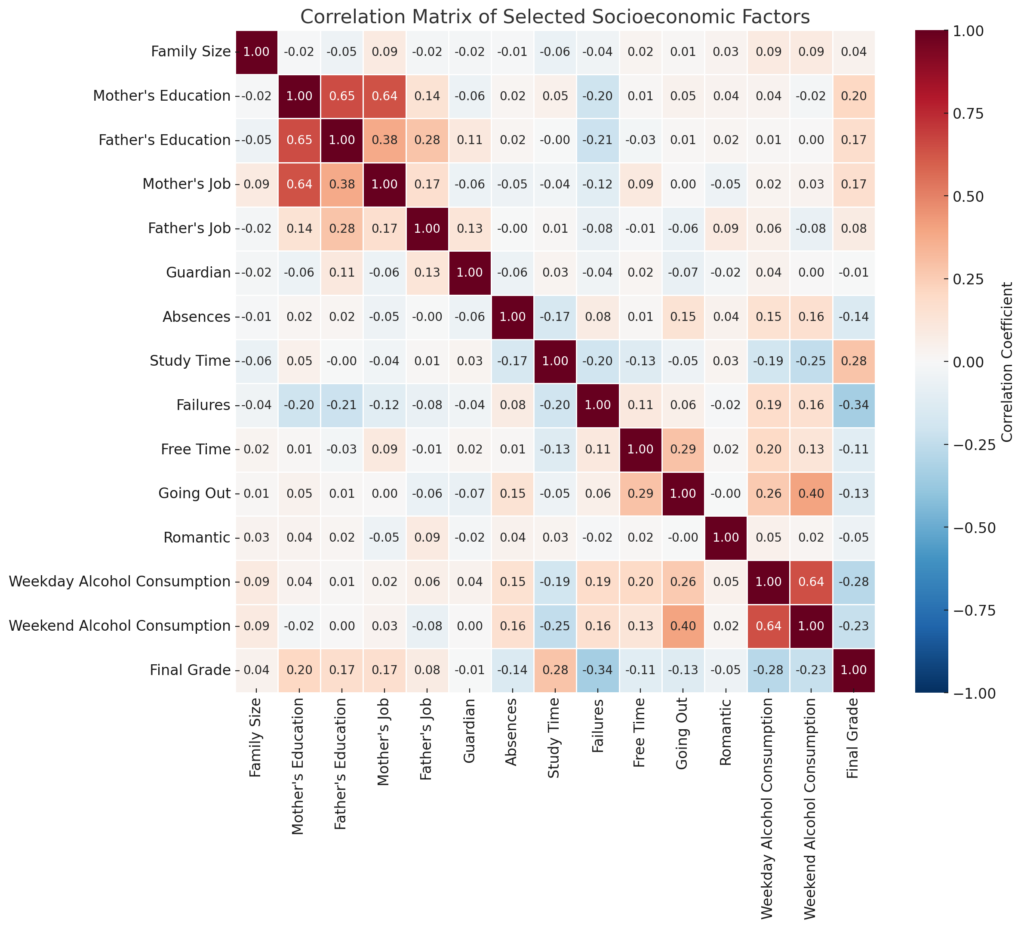
The figure above shows a heatmap that shows a correlation matrix of certain variables. The gradient towards red indicates positive correlation (closer to 1.0), and blue indicates negative correlation (-1.0). White indicates little to no correlation at all.
When examining the relationship between going out and free time, against final grades, the heatmap shows a weak negative correlation coefficient of -0.13 and -0.11 respectively.These findings indicate that whilestudentswho have more free time and engage in social activities tend to have slightly lower academic performance, the effect is minimal.
It should be noted how many variables don’t show strong correlation between each other. This is due to the dataset having a relatively small sample size, resulting in a higher variance that makes it harder to draw strong conclusions (view more information about our data here). Though patterns of factors that affect student performance have been identified, these factors could be studied further with a large dataset that has less variability. Additionally, numeric variables are not the only indicator of a student’s academic success. Prior research was utilized to guide understanding of the data, taking into account aspects of student life that cannot be represented through numbers.
RESEARCH QUESTION 1
How do socioeconomic factors amongst Portuguese students contribute to their past and present academic performance?
Students who miss more school tend to dedicate fewer hours to studying
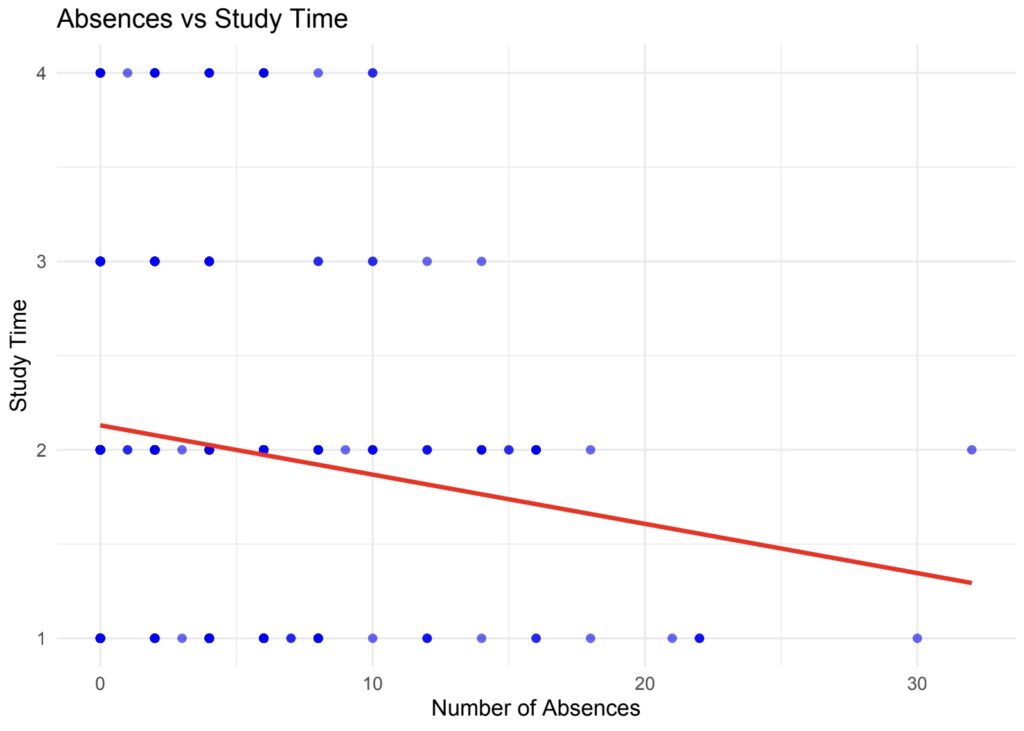
To quantify the relationship between absences and study time, the number of absences is plotted against study time. The study time variable was measured on a scale from 1 to 4 based on weekly study hours: 1 (less than 2 hours), 2 (2 to 5 hours), 3 (5 to 10 hours), and 4 (over 10 hours). The number of absences represents the students’ total absences throughout the school year.
Students studying between 2-5 hours per week typically fell within a scale of 2, while those studying more than 5 hours ranked higher. The data shows that as absences increase, study time decreases. This is shown from students with more than 10 absences generally reported study time scores of 3 or lower. Additionally absences from 15 to 20 reported study time scores of 2 or less.
While study time is categorized broadly in the dataset, limiting the precision of analysis, the trend remains clear: frequent absences often correlate with reduced study time, which may contribute to lower academic achievement. These findings indicate that absenteeism is not only linked to lower academic engagement but may also signal underlying socioeconomic barriers that prevent students from fully participating in their education, which may contribute to lower academic achievement.
Higher absenteeism is associated with lower final grades
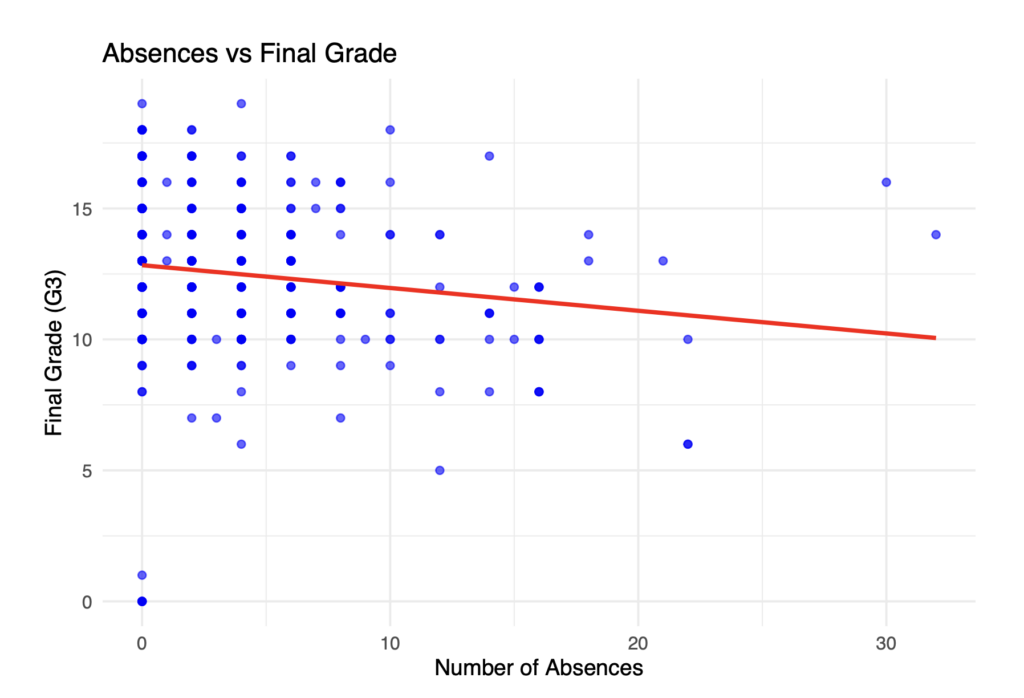
The scatterplot visualizes the relationship between student absences and final grades, measured on Portugal’s standardized 0-20 grading scale. A minimum score of 10 is required to pass, with grades between 10 and 20 signifying sufficient to excellent academic performance.
Further analysis shows that most students in the dataset had relatively low absence rates (0-10 absences), and within this range, their final grades varied widely. However, as the number of absences surpasses 10, a clear downward trend emerges—higher absenteeism is associated with lower final grades. Notably, while many students still achieve passing scores, the number of “excellent” grades declines significantly, with the majority of frequently absent students barely meeting the passing threshold.
The data visualizations and in-depth research build a compelling case for how socioeconomic factors can help explain disparities in student academic performance in Portugal, particularly through the lens of attendance, study time, final grades (G3), and parental occupation (Mother’s Job, Father’s Job). The data shows that students missing more than 10 days exhibit a clear decline in grades, and those with over 20 absences overwhelmingly report the lowest study time scores. This suggests that students with higher absenteeism tend to study less, indicating that attendance plays a crucial role in shaping academic effort.
However, absenteeism is not merely a reflection of discipline—it can also signal deeper socioeconomic challenges that limit a student’s ability to engage with school. Limited access to reliable transportation, unstable home environments, or financial pressures that force students to take on additional responsibilities can all contribute to inconsistent attendance, which in turn may lead to reduced study time and lower academic performance. In this way, absenteeism becomes not just a consequence of individual choices, but a symptom of broader structural barriers that disproportionately affect students from disadvantaged backgrounds.
A parent’s job can affect student academic performance
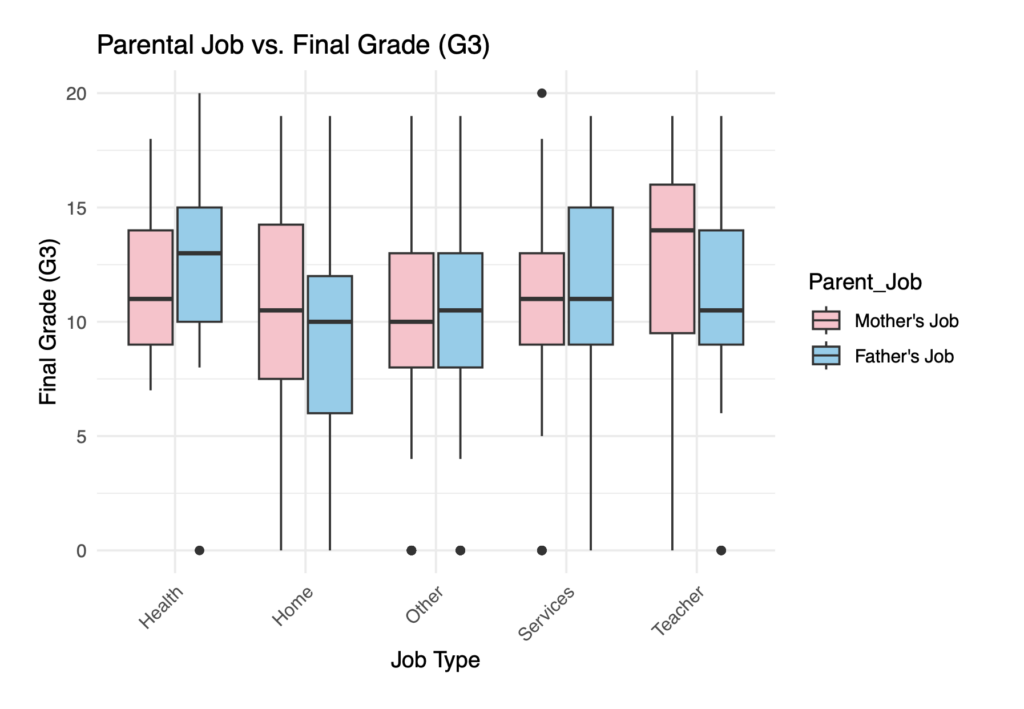
Parental occupation further highlights these disparities. This visualization uses box plots to compare between parental job types and students’ final grades. The different occupational categories included health, home, other, civil services, and teaching, while differentiating between mothers’ and fathers’ professions.
The findings indicate that having a parent in an educational profession—particularly a mother who is a teacher—has a strong positive impact on student performance. Students with mothers working as teachers had a median final grade of 14 — notably higher than those whose parents held other jobs, where the median scores ranged between 10-11. This suggests that mothers who are educators may provide additional academic support at home, assist with homework, and cultivate an environment that prioritizes learning.
Similarly, fathers working in healthcare also appear to contribute positively to student achievement, with a median final grade of approximately 13. This trend may be attributed to higher academic expectations within the household or financial stability that allows for access to additional educational resources such as tutoring. Interestingly, the data suggests a gendered disparity in the impact of healthcare professions, with fathers in healthcare having a more pronounced effect on student performance compared to mothers in the same field. This could be linked to the lower ratio of women in leadership healthcare positions in Portugal, which may influence the extent of their financial or academic support at home.
Notably, students with stay-at-home fathers tend to show greater variability in their final grades, with most scores skewing downward. In contrast, students with stay-at-home mothers generally have higher final scores, with the majority skewed upward. These findings not only reflect the gendered division of labor in Portugal but also suggest that lack of employment amongst fathers—the typical breadwinners—can contribute to lower academic performance.
These findings reinforce how family background influences student success, with access to educational support, financial stability, and parental involvement playing critical roles. This research challenges the idea that academic success is purely a function of individual effort and instead highlights systemic inequalities that shape educational trajectories. Students from lower-income families are more likely to struggle—not because they lack motivation, but because they face greater structural barriers to learning. The study underscores the reality that, despite Portugal’s progress in democratizing education, socioeconomic disparities remain a significant determinant of student performance, making it clear that access to schools alone is not always enough to close the achievement gap.
RESEARCH QUESTION 2
To what extent does a student’s social lifestyle influence their academic performance?
Free time and Socialization amongst students show a balanced social life
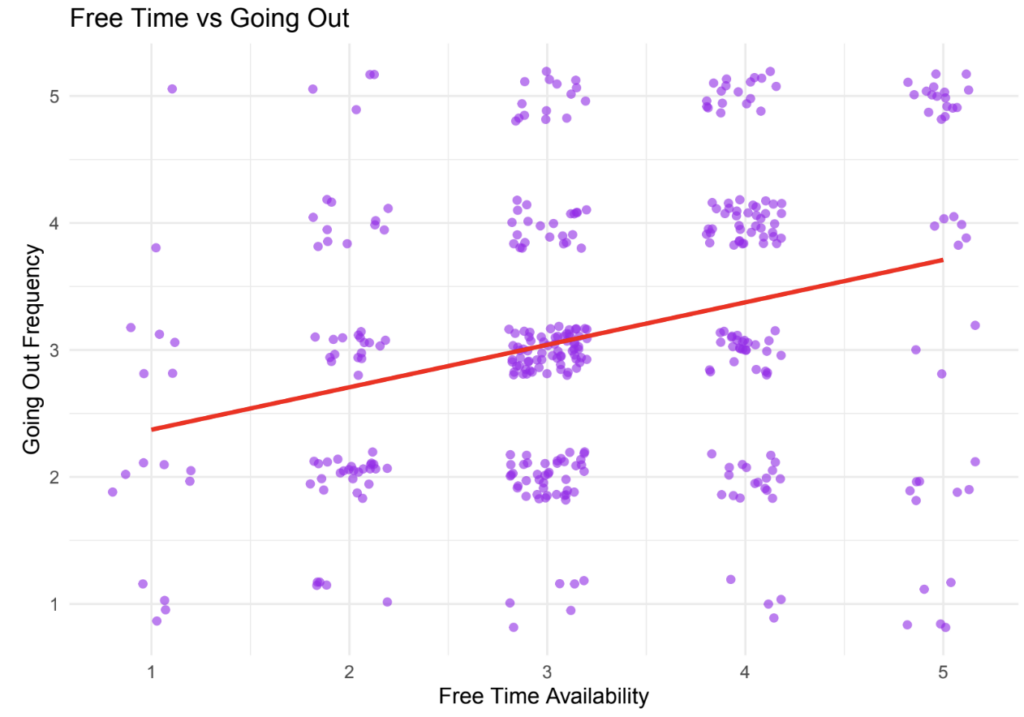
The scatterplot visualizes the relationship between students’ free time and their frequency of social outings with friends. To enhance clarity, data points were slightly dispersed to prevent overlapping, allowing for a more accurate representation of where students fall within these categories. Both variables were measured on a scale of 1 to 5, with 1 indicating minimal free time or social outings and 5 indicating high levels of each.
The analysis reveals a positive correlation between free time and social outings—students with more free time tend to go out with friends more frequently. Most students reported moderate levels of both variables, suggesting a balanced social life for the majority.
Excessive alcohol consumption may negatively impact a student’s ability to do well academically
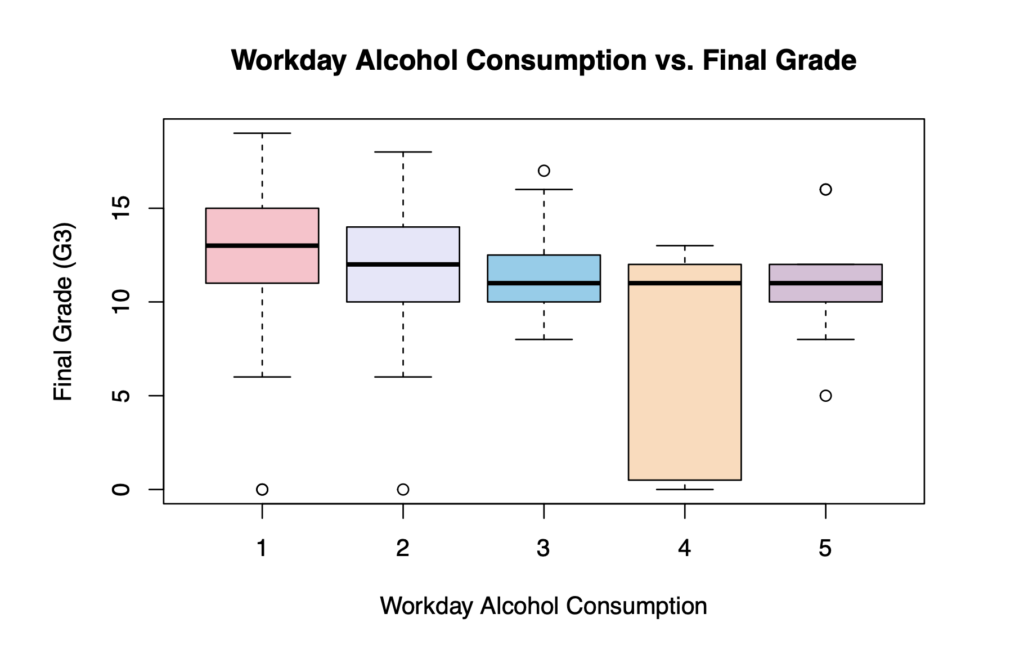
The analysis of workday alcohol consumption and final grades reveals a negative correlation between these two variables. Alcohol consumption levels were measured on a scale from 1 (very low) to 5 (very high), and students who reported higher levels of alcohol intake during the school week tended to have lower final grades. The correlation coefficient of -0.28, as indicated by the earlier heatmap, suggests a moderate negative relationship, meaning that as alcohol consumption increases, academic performance declines.
Given that the legal drinking age in Portugal is 16 for wine and beer, and 18 for spirits, alcohol consumption among students is not uncommon. However, frequent drinking during the school week may contribute to reduced study hours, impaired cognitive function, and decreased academic engagement. These factors could explain the observed decline in grades among students with higher alcohol consumption levels.
The data suggests that students who spend more time on social activities tend to have lower study hours and higher absenteeism, which may contribute to weaker academic performance. The scatterplot visualizing free time and social outings shows a clear positive correlation—students with more free time tend to go out more frequently. While social interaction is beneficial for mental well-being, excessive socialization may interfere with academic engagement if it reduces study time or leads to school absences. Similarly, weekday alcohol consumption is negatively associated with final grades, with students who drink more frequently during the school week showing lower academic performance. This aligns with research suggesting that substance use can impair cognitive function, reduce motivation, and increase distractions from schoolwork.
The relationship between attendance, study time, and social habits highlights how lifestyle choices shape academic outcomes. The analysis indicates that students who frequently go out and engage in social activities tend to miss more school and dedicate fewer hours to studying. This pattern suggests that while moderate socialization is normal, excessive time spent away from academic responsibilities can negatively impact performance. However, the data does not suggest that socialization alone causes lower grades—rather, it is the balance between free time, study time, and attendance that determines academic success. The findings reinforce the importance of social-emotional learning (SEL), which emphasizes self-regulation, responsible decision-making, and time management as critical factors in academic achievement. While social life is an integral part of student development, finding a balance between academic and extracurricular activities is key to maintaining strong academic performance.
The data presented highlights the complexity between socioeconomic backgrounds, attendance, study time, and social behavior, and how this shapes student performance. Increased absence from school and lower study time correlate with reduced academic achievement, which often reflects deeper structural challenges such as financial instability and limited access to educational support. Parental occupation also plays a role, with students whose parents in healthcare or education demonstrate higher academic scores. Additionally, social habits, specifically with alcohol consumption and time with friends, can impact academic performance. It should be noted how this emphasizes the importance of maintaining a balanced lifestyle, and how academic success is influenced by broader systemic conditions.